
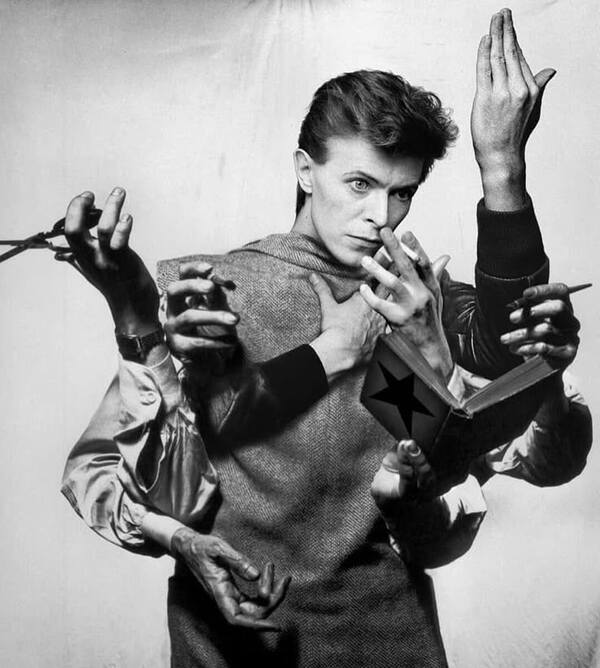
If you're a busy director, a one-person treatment might be for you.
There are benefits and drawbacks to having one person handle your treatment from start to finish instead of a whole team. Reviewing the work we've been part of over the last few years, one thing stands out: a one-person job tends to look more cohesive, while treatments executed by larger groups inevitably become more complex puzzles, for good or bad.
To cut to the chase: treatments created with a team of creatives often carry a richer visual language, but treatments executed by one person (design, text and visual research together) tend to align more closely with what the client expects and stay closer to the director's language. When a team contributes, the work is enriched with new ideas and different takes on the script, but all of that has to be filtered, thought through and edited down by directors and producers at speed-of-light deadlines.
Built for Busy Directors
That's not to say treatments don't benefit from more people feeding ideas in. They clearly do. But there are situations where keeping things simple, between a director and one trusted treatment expert (something we often do at Ghost), wins outright. This approach specifically helps busy directors: those constantly on set, making a zillion decisions on the spot, juggling one or more treatments on the side. Directors prepping a shoot in Madrid while a Boston pitch is due Monday. Directors whose only window to give notes is a thirty-minute taxi ride.
In that situation, working with one reliable treatment professional is ideal. When the scope opens up to a range of professionals, each operates differently: different briefs, different questions, different directions, more rounds of input required. A director on set simply doesn't have time to manage that.
Working with one person who knows you well, who doesn't need much input precisely because they already know your work in depth, is a gift.
This is why it's our favourite way to work at Ghost, and why most of the treatments we deliver are solo-led. Building deeper ties with directors is what we aim for, and it's more enjoyable to collaborate with someone whose visual and storytelling language you already know intimately. The dynamic benefits the director just as much. They get better visuals, text and layouts, because the one person on the job knows them well enough to take the pitch to the next level. Directors who choose this setup tend to come back; the second project is always easier than the first.
Years of pitching have taught us that directors prefer professionals who are so deeply embedded in their visual language and creative process that they can contribute without prompting. They know which ideas will land, which visuals you'd gravitate to in research, and the tone of voice that suits your writing.
But Is It Cost-Effective?
There's another part of the case that gets underweighted: cost. Team treatments stack rates. A writer, a researcher, a designer, sometimes a producer to coordinate them, each with their own day rate. Once the team is in place, you're often paying twice what a single experienced author would charge for the same delivery. The math gets worse once you count coordination overhead: group calls, briefing rounds, revision cycles that loop through everyone. With one author, the engagement is simpler too: one brief, one timeline, one invoice.
A solo author who writes, researches and designs does the same work without that overhead, often at half the budget.
What you give up with solo execution is creative breadth. One brain has one taste, and even a strong generalist will be sharper in some areas (writing, say) than others (visual research). The way to recover that is time. A longer timeline gives the solo author room to research one day and write the next, which is usually enough to close the depth gap. Without that breathing room, depth is the trade-off. And when a project genuinely needs more eyes mid-flight, expanding from solo to a small pairing is straightforward, not a restart. You don't lose what's already built.
What Next? If this resonates with you, we'll be sharing more deep dives into the craft of treatment writing and design. Let us know if there's a topic you'd like us to explore next.
Get in touch:
- Website: www.treatmentsbyghost.com
- Email: info@treatmentsbyghost.com
- Instagram: @ghost_treatments